This will be the first of 3 articles on braking.
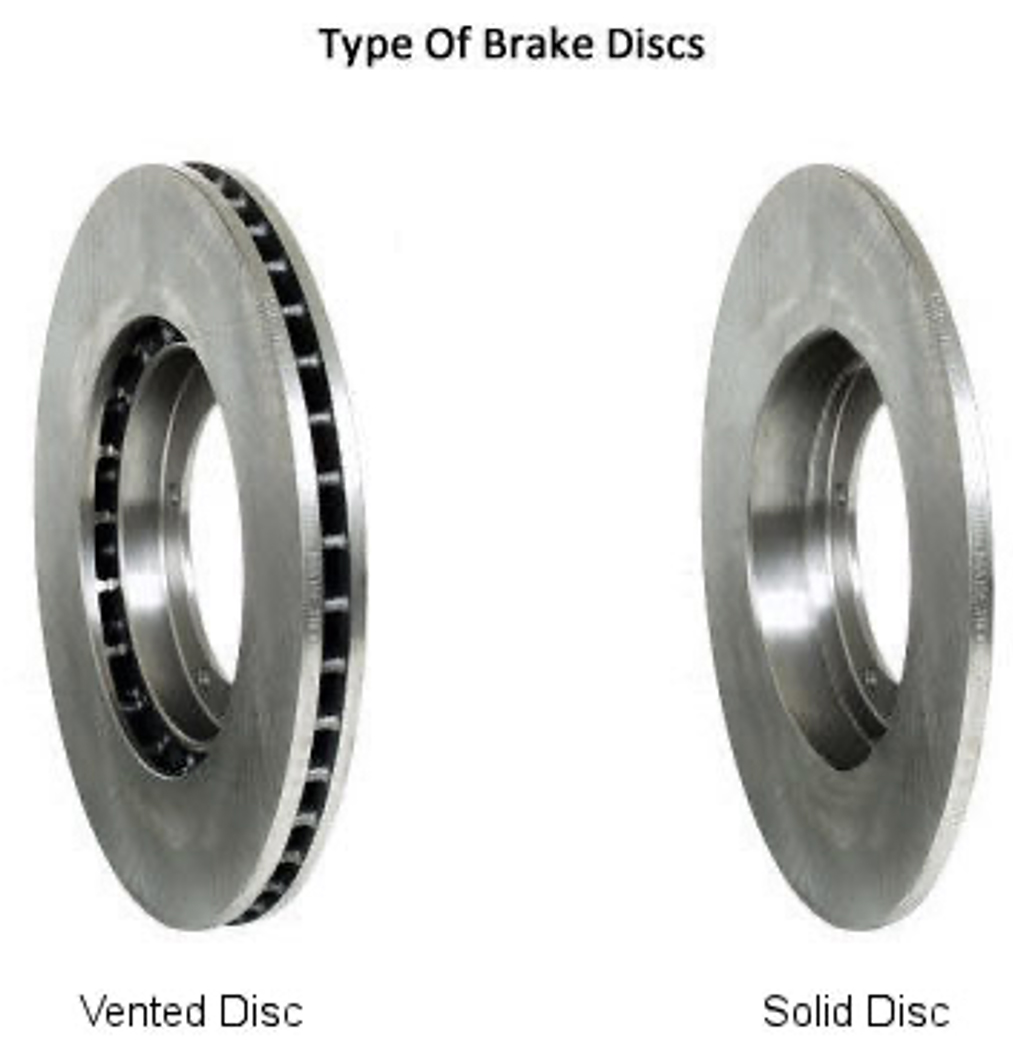
In this Tech Corner I will review the different brake rotors available and their advantages and disadvantages. There are 2 typers of rotors. Vented and non-vented.
Non vented rotors are used on low price cars and on the back of some medium price cars. They are the basic brake systems. They don’t provide good cooling and are subject to early fade, so we will not spend any time on those. The non vented rotors are solid discs.
Then there are the vented rotors. Vented disc brakes feature two friction surfaces separated by internal vanes or fins, creating a hollow center that allows air to flow through and rapidly dissipate heat preventing fading.
 Then there is the surface of the disc. There is plain, drilled, slotted and a combination of drilled and slotted.
Advantages of Plain Brake Rotors
- Durability and Life Span: With no drilled holes or slots to create stress points, plain rotors are less prone to cracking, making them generally longer lasting.
- Cost-Effective: They are generally the most affordable option, making them ideal for standard passenger car replacements.
- Quiet Operation: They do not produce the noise often associated with slotted or drilled designs.
- Pad Longevity: Due to their smooth surface, they are less abrasive on brake pads.
- Reliability: They offer consistent, predictable braking performance for everyday commuting.
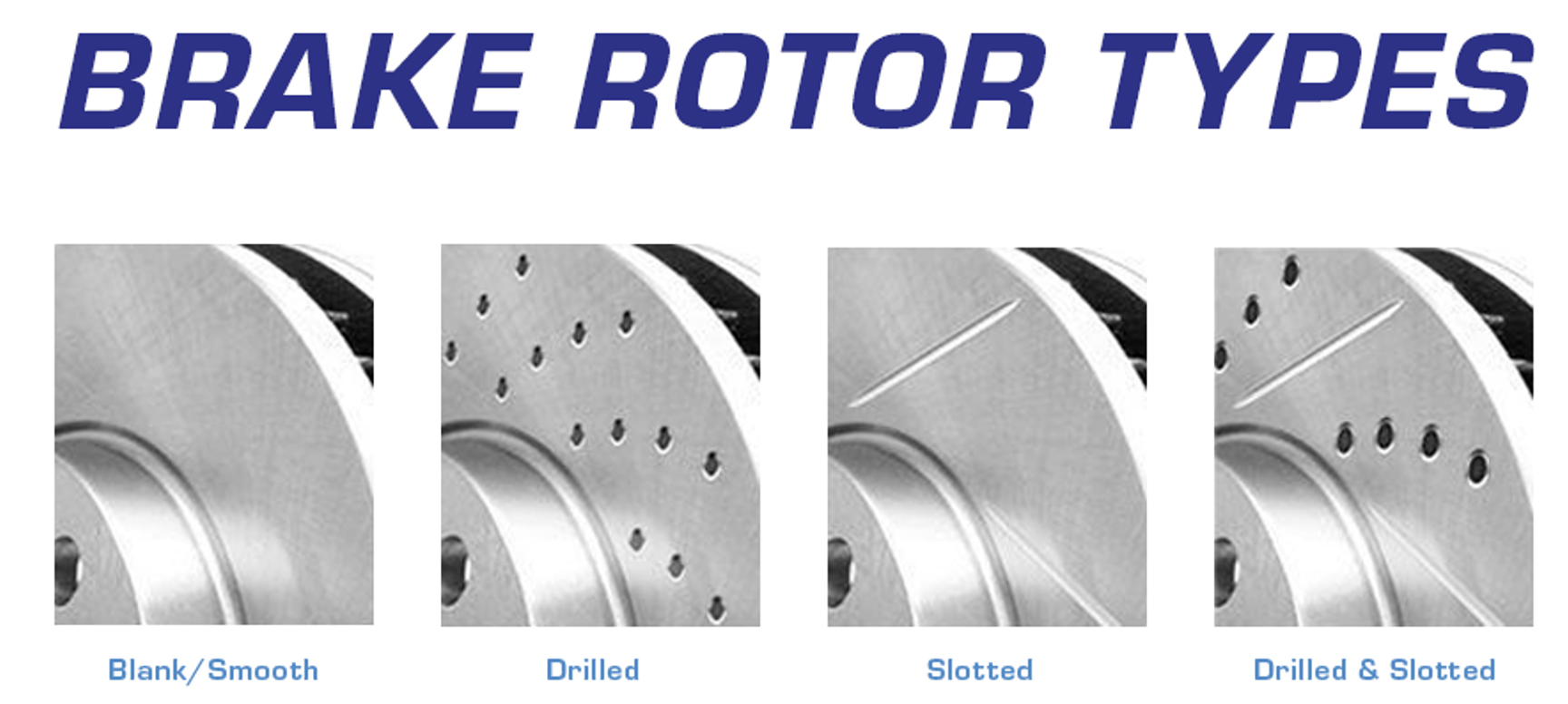 Disadvantages of Plain Brake Rotors
- Heat Management: They are less effective at dissipating heat during extreme, repetitive braking (e.g., in mountainous terrain or racing), which can lead to brake fade or warping.
- Gas/Dust Retention: Lacking slots or holes means they cannot efficiently remove gas or dust produced by brake pads, which may slightly reduce braking performance under extreme heat.
Advantages of drilled rotors
- Improved Cooling: The holes promote airflow, allowing the rotor to dissipate heat more effectively.
- Reduced Brake Fade: Drilled holes prevent the buildup of gases and debris between the pad and rotor, maintaining consistent stopping power.
- Better Wet Performance: Holes efficiently evacuate water from the rotor surface, improving braking in rain or snow.
- Aesthetics: They provide a sportier, high-performance look often desired by car enthusiasts.
Disadvantages of drilled rotors
- Cracking Risk: The holes create weak points, making them prone to developing cracks around the drilled areas under intense heat and heavy stress.
- Faster Pad Wear: The reduced surface area and increased surface roughness can cause brake pads to wear out 10-20% faster.
- Higher Cost: Additional manufacturing processes make them more expensive to purchase.
- Reduced Thermal Capacity: Due to less material, they may not handle extreme, constant heat as well as solid rotors.
Drilled rotors used to be recommended for track use but because they are prone to cracking are not anymore. They are mostly use for the look.
Advantages of Slotted Rotors
- Improved Cooling and Reduced Fade: Slots assist in dissipating heat more effectively under heavy braking, such as driving down steep mountains or high-speed track use.
- Better Wet Performance: The slots act as channels to evacuate water, improving braking efficiency in wet, rainy conditions.
- Increased Bite and Cleaning: Slots help remove brake dust and gas that accumulate between the pad and rotor, providing a consistent friction surface.
- Durability: Compared to drilled rotors, slotted rotors are more resistant to cracking under extreme heat and stress.
Disadvantages of Slotted Rotors
- Accelerated Pad Wear: The edges of the slots act like a file, causing brake pads to wear down faster than with smooth (blank) rotors.
- Noise Issues: A humming or whirring sound can sometimes be heard during heavy braking.
- Shorter Rotor Life: Due to the increased friction and heat handling, slotted rotors often have a shorter overall lifespan.
- Unnecessary for Daily Driving: For normal street driving, they provide limited benefits over plain rotors.
Slotted rotors are best suited for performance cars on track, heavy trucks, and towing vehicles that encounter high-temperature, high-stress braking situations.
Advantages Drilled and Slotted |Rotors
- Superior Cooling & Reduced Fade: Drilled holes facilitate heat dissipation, allowing for better cooling in, for example, mountainous driving.
- Improved Wet Performance: Holes allow water to escape, enhancing “wet bite” in rainy conditions.
- Consistent Braking: Slots clear away brake dust, gases, and debris, maintaining consistent contact between the pad and rotor.
- Reduced Warpage Risk: Improved heat dissipation can prevent the rotor from warping under heavy use.
Disadvantages Drilled and Slotted Rotors
- Prone to Cracking: The drilled holes create weak points, making them more susceptible to cracking under extreme, repeated heat cycling (e.g., heavy track use).
- Increased Pad Wear: The slots can act like a cheese grater, wearing down brake pads faster.
- Noise: They may produce more noise during heavy braking.
- Higher Cost & Maintenance: They are generally more expensive and may require more frequent replacement due to fatigue.
- Not Necessary for Typical Driving: For normal daily commuting, they provide little benefit over solid rotors.
- Aesthetics: They provide a sporty, high-performance look
Conclusion
Plain rotors are best for day to day driving offering low noise and longevity.
Drilled rotors are best for the looks but not suitable for track because of their susceptibility to cracking.
Slotted rotors are best for track
Drilled & Slotted are best for street-driven performance cars, trucks, and SUVs that tow or experience heavy, high-speed braking.
In the next article, I will review the different brake pads.
Richard Limoges.